
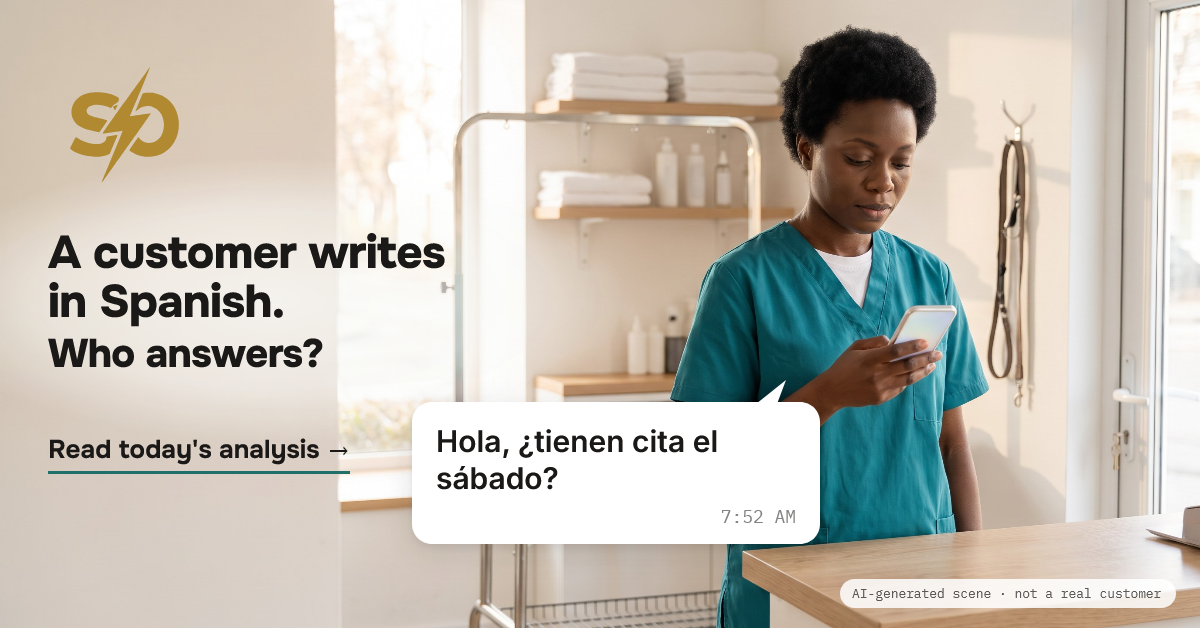
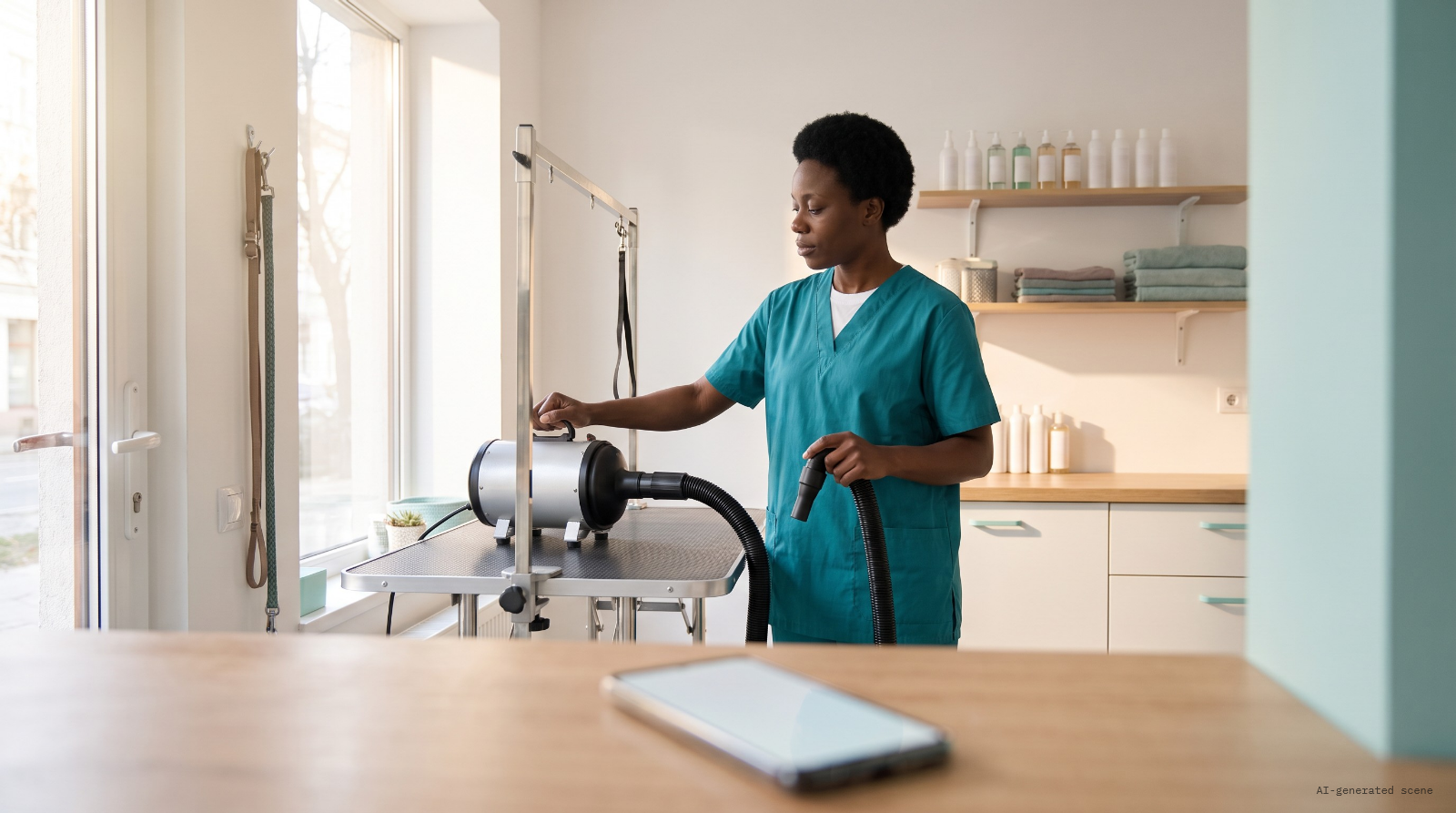
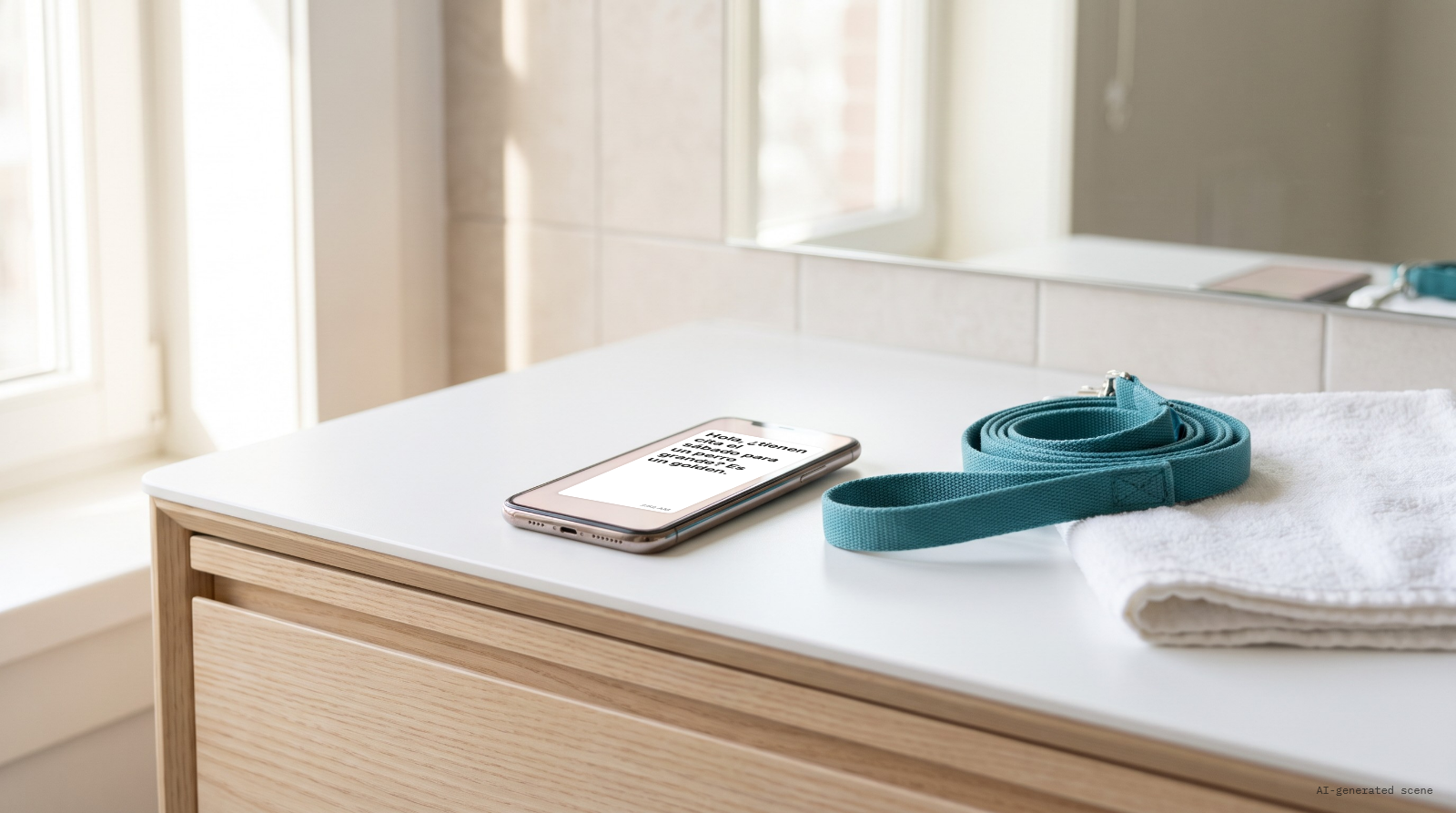
Tuesday, 8:15 a.m. Imani opens her grooming salon, runs a dryer for a second, and checks her phone. A message came in during the night: "Hola, ¿tienen cita el sábado para un perro grande? Es un golden." Imani doesn't speak Spanish. She can paste it into a translator, answer in English, or leave it for later. The customer will choose for her: she'll book wherever someone answers in her language.
Spanish in the U.S. isn't rare or exotic. But most small businesses never choose the language they answer in. It just happens.
We looked at what this month's data says about Spanish-speaking customers, and at which language the new AI tools work in for now.
Imani's salon is our sample business.
📊 One American in five is Hispanic, and fresh language data arrives October 29
On August 11, the U.S. Census Bureau reported 70.1 million Hispanic people in the country as of July 1, 2025. That's 21% of the population and the largest minority group. Which language they speak at home will come from the new American Community Survey (ACS) release for 2025, which the Bureau scheduled on October 13 for October 29, two days after this piece. Until then, only last year's figures exist, and we don't repeat them here.
Customers who write in Spanish are already among yours. The new numbers will only say how many.
📺 Ads in a viewer's own language work harder, the industry says
On September 30, EDO, a company that measures how people respond to TV ads, released its yearly report on Spanish-language TV. By its numbers, the average ad on Spanish-language channels was 24% more effective than the average English-language one, per viewer and per second. The report draws on 1.3 million ad airings from 631 brands. It's EDO's own paid press release, and it's about TV, not messages. But big brands take one lesson from it: speaking to people in their language pays off.
Big brands pay to speak Spanish. A small business already gets those messages, and often answers them in English.
🌐 New AI tools often start in English
On October 15, Google announced two AI features in Gmail for paid Workspace plans: "AI Inbox," which pulls tasks out of your email, and "Gmail Live," a voice search for your inbox. Both have the same limit for now: U.S. only, U.S. English only. That's a normal way to roll out a product, but it tells an owner something important. A tool that reads your inbox may not understand a customer's email in Spanish as well as one in English, at least not yet.
Check which language your assistant works in before a customer writes to it in something other than English.
What this means for a shop of five
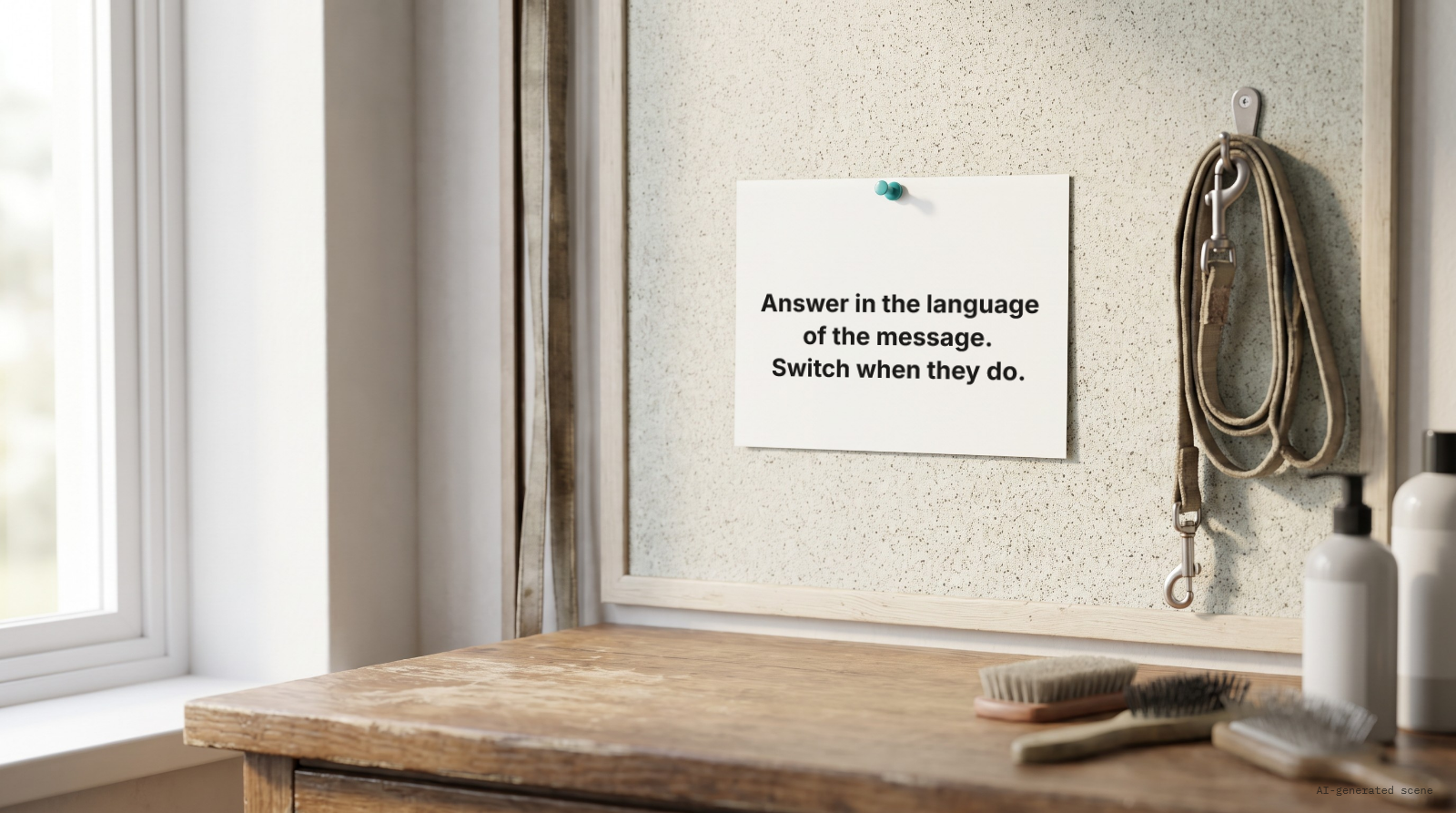
"¿Tienen cita el sábado?" is a Saturday booking, not a translation job. Answer it a day later in English, and the booking goes next door. But don't guess a language from a last name or a face either. In a Pew survey from 2022, 78% of Hispanic adults said speaking Spanish isn't required to be Hispanic, and among those who mostly speak English, 93% said so. The rule is simple: answer in the language of the message, and switch when the person does. Prices, hours and rules have to be the same in both languages, or the Spanish-speaking customer gets a different price.

What to take with you
- Find the last three messages in your inbox that weren't in English, and check which language you answered in, and how fast.
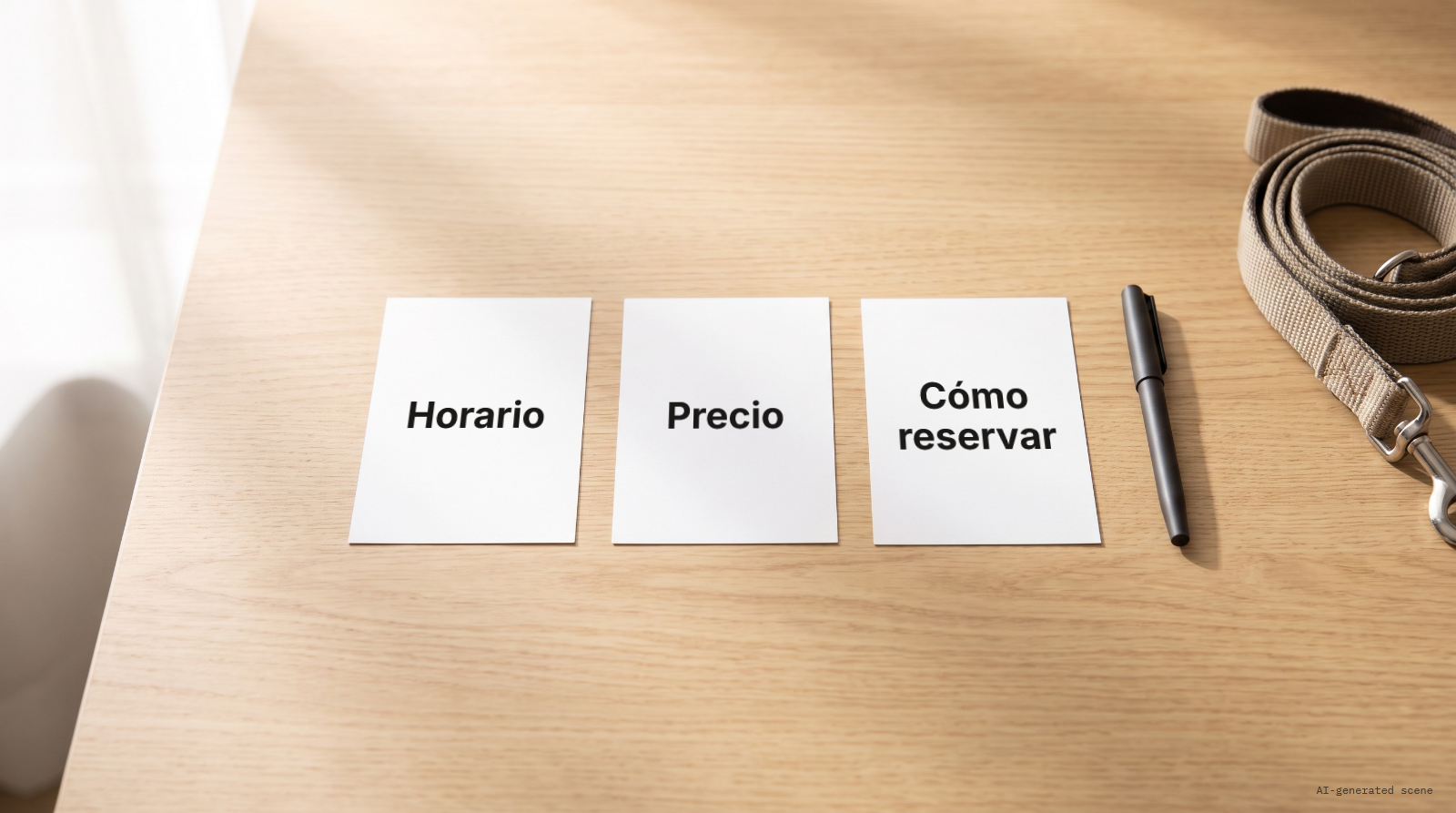
- Write Spanish answers to your three most common questions: hours, price, how to book.
- Check that the prices in your Spanish answers match the English ones to the cent.
- Get a Spanish answer from your assistant or translator, and show it to someone who speaks the language.
- Decide what you'll do with a message in a language neither you nor your assistant knows, and write that rule down.
What language was the last non-English message you got in, and which language did you answer in?
Check what AI says about your business: smashone.us/check/
Sources
- U.S. Census Bureau, "National Hispanic Heritage Month: 2026," Facts for Features CB26-FF.07, August 11, 2026 — https://www.census.gov/newsroom/facts-for-features/2026/hispanic-heritage-month.html
- U.S. Census Bureau, release schedule for the 2025 ACS 1-year estimates, CB26-164, October 13, 2026 — https://www.census.gov/newsroom/press-releases/2026/dates-announced-for-2025-acs-1-year-estimates.html
- EDO, "Spanish-Language TV Ads Drive Nearly 50% More Impact…," paid press release via Business Wire, September 30, 2026 — https://finance.yahoo.com/media-advertising/articles/spanish-language-tv-ads-drive-123000030.html
- Google Workspace Updates, Gmail AI Inbox for paid Workspace users, October 15, 2026 — http://workspaceupdates.googleblog.com/2026/10/gmails-ai-inbox-is-rolling-out-to-paid-Workspace-users.html
- Google Workspace Updates, Gmail Live for paid Workspace users, October 15, 2026 — http://workspaceupdates.googleblog.com/2026/10/gmail-live-is-rolling-out-to-paid-Workspace-users.html
- Pew Research Center, "Who is Hispanic?," September 15, 2026 — https://www.pewresearch.org/short-reads/2026/09/15/who-is-hispanic/
