
On Thursday OpenAI released GPT-Live-1 in its API — a voice model that listens and speaks at the same time, what the industry calls full-duplex — and named the telephone as the point. “Telephony support: Enables deployment of full-duplex voice agents for phone calls, from restaurant reservations to customer support,” its release says. The Decoder, the same afternoon, put numbers to it: turn-taking latency down to 0.8 seconds from 1.4, tool-calling accuracy up to 87 percent from 60. The first place it landed was not a demo. Hours later Yelp announced it had put the model inside Yelp Host, its voice product for restaurants, and Hatch, its platform for service businesses. Reservations and repair calls.
The week in one sentence: the phone stopped being the thing a small business misses and became a job something else can hold.
Three model makers shipped the same organ in six days
It was not one announcement. On September 5, Small Business Trends reported Google’s Gemini 3.5 Transcribe: in its numbers, a 4.0 percent word error rate in streaming and more than 85 languages detected. On September 6, The Decoder covered Meta’s Muse Voice Transcribe, trained on more than 70 languages and hitting 3.1 percent on English in an independent Artificial Analysis evaluation; Meta, the piece notes, competes here on price. Then Thursday’s release from OpenAI.
Listening and answering in real time became a line item in three product catalogs inside one week. When three suppliers race on the same capability, its price goes one way.
The money showed up in a hardware chain, not in a keynote
On Wednesday, PYMNTS showed what the chain Batteries Plus does with it. Each of its more than 700 stores, PYMNTS writes, “receives an average of 30 calls a day and some go unanswered simply because an associate can’t step away from the customer standing in front of them.” Its president, Jon Sica, calls the fix “a multimillion dollar move.” Their assistant answers in English and Spanish, screens spam and escalates to a person when the conversation needs one.
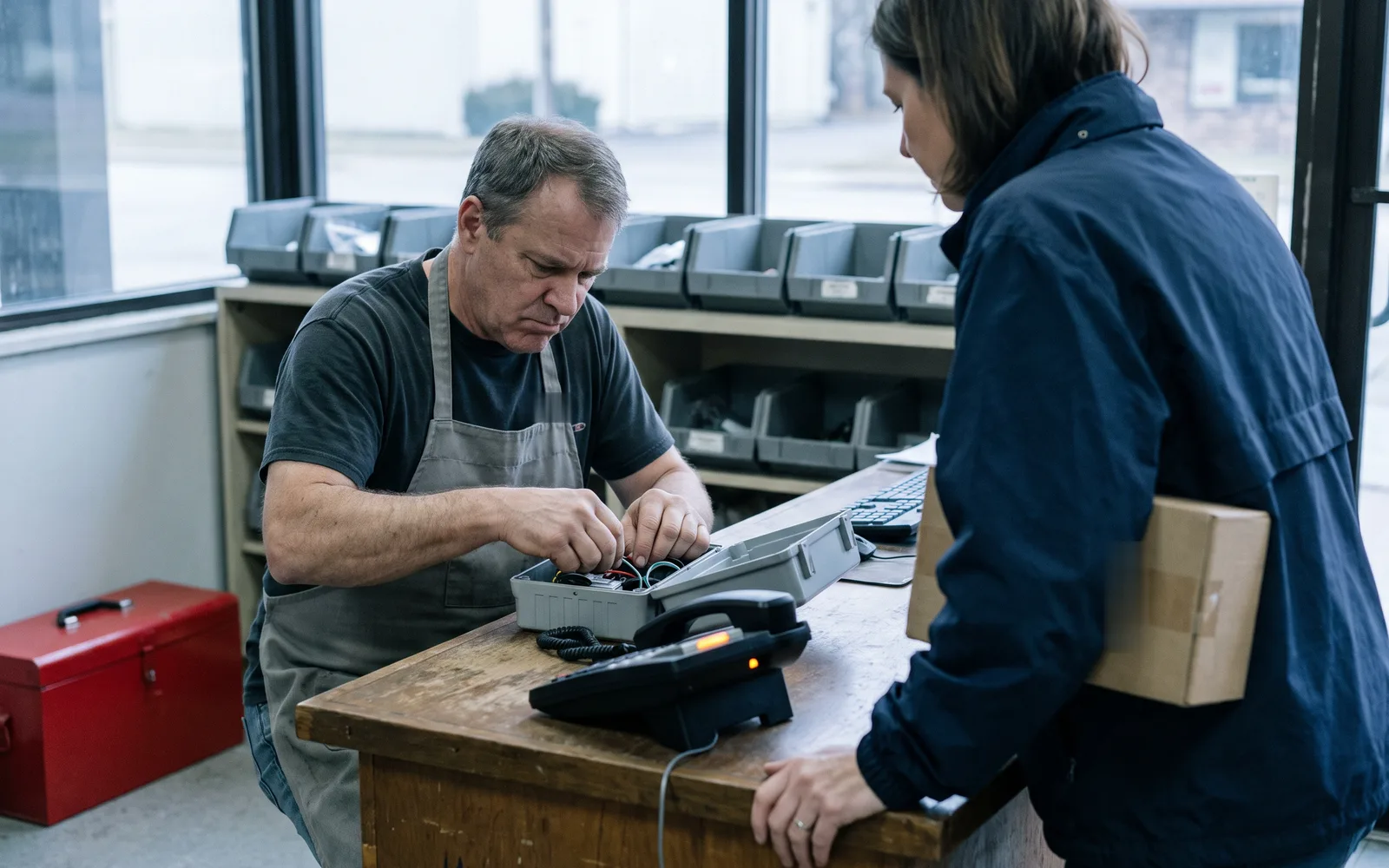
Seven hundred stores is not your shop, and the count is theirs. What transfers is the shape of the problem: those calls are lost not to a competitor and not to price, but to the fact that your hands are inside the last customer’s job.
An industry contributor in Dentistry Today, writing that Wednesday, put the cost in one line: “a patient who reaches a voicemail rarely calls back, every answered call is a patient the practice would otherwise have lost.” He counted the market from the other end too: “dozens of companies now sell an AI receptionist built for dental front desks alone” — and that is one profession.

What nobody has shown
Nothing this week shows a machine answering better than a person, and the one published quality number cuts both ways: in a banking voice support benchmark, The Decoder reports, GPT-Live-1 passes 32 percent of tasks against 12.4 percent for the previous model — nearly triple in a generation, and still two tasks in three unfinished. Yelp’s line that Yelp Host “has handled more than 1 million calls for restaurants” since October 2025 is its own count of its own product. And answering is not free: the voice layer alone runs at five cents a minute by OpenAI’s published rate, which The Decoder called “not cheap.”
Four questions to ask anything that answers your line
Where does the answer come from? Your hours, services and real availability must be read out of your data, not improvised. A voice that invents a price is worse than a voicemail: the caller believes it.

What language does it answer in? Yelp says its voice products now respond in nearly any language; Batteries Plus runs English and Spanish. In the United States a caller’s language is not a line on a slide: it decides whether they become your customer.
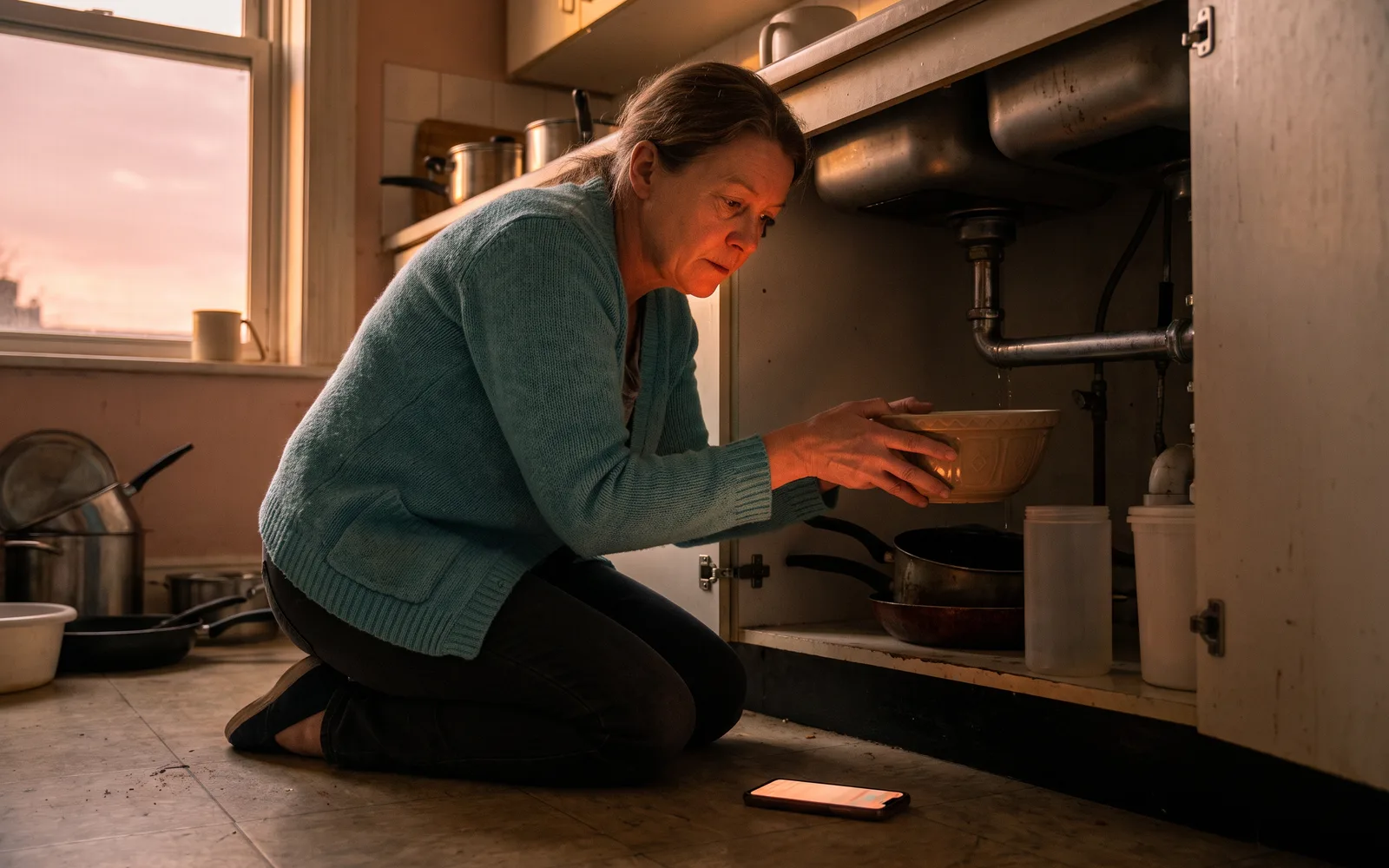
What does it do when it does not know? The honest behavior is to say so and take a message. The dangerous one is a confident sentence you must walk back tomorrow.
Who may say “you’re booked”? A held time you confirm is a booking. “The assistant thinks it’s booked” is a double booking with a delay on it.
How we think about it
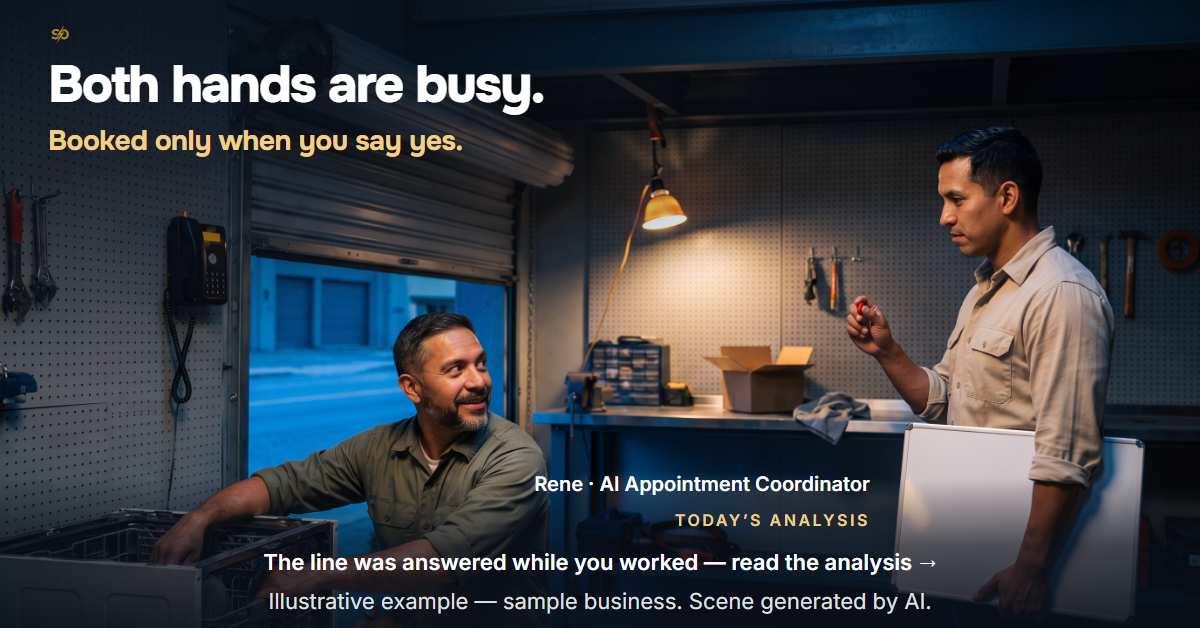
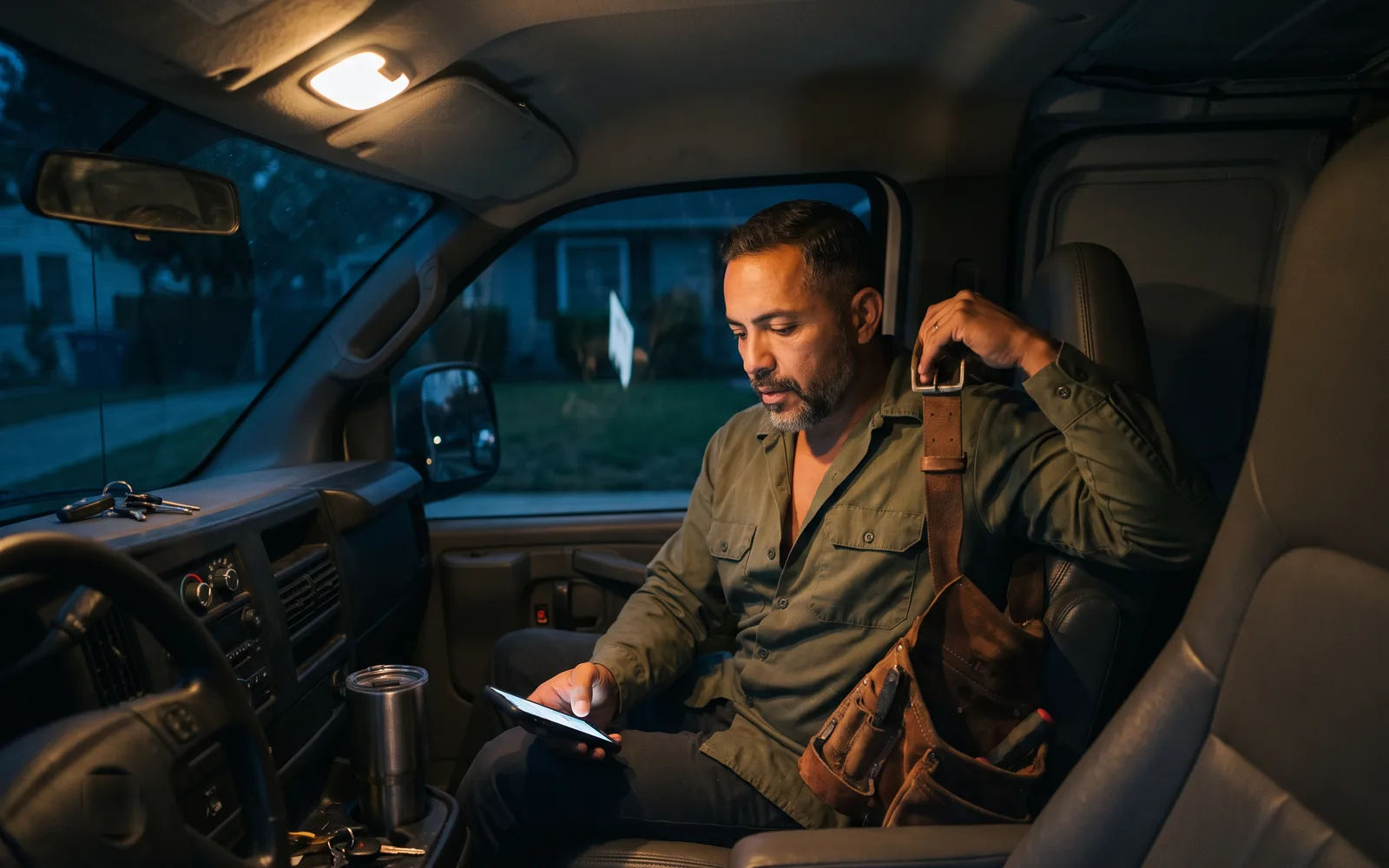
We build the phone as a job, not a feature, which is why the answer to all four is written into the role itself. Our AI receptionist, Jordan, takes the line when no one else can: at lunch, at night, on a Sunday, with your hands inside somebody’s dishwasher. She answers out of your own catalog, hours and services; where it has no answer she says so and takes the name, the number and the point of the call, in the language the person used. She offers time that is genuinely open, holds the caller’s choice and brings it to you to confirm — saying exactly that on the call, not promising a booking you have not seen. She never takes a card number, in any wording.
That is the order a small business can hire in now: the AI employee first, the person after, once you see what is left for them to do. You do not learn an interface to run her — you tell her how to greet people and when to call you in, by talking in the ChatGPT, Claude or Gemini app already open on your screen. And before you hire anyone, you can read our AI employees working in public, on two demo storefronts: Tampa Pasta House and Casa Lista, whose pages and message threads anyone can open.
The news of the week is that a machine can hold a natural phone conversation. The question of the week is older and smaller, and it is yours: when the line rings at noon, does anybody say your name?
Sources
- OpenAI — “Build more natural voice experiences with GPT-Live-1 in the API”
- The Decoder — “OpenAI’s GPT-Live-1 API lets developers build apps that talk and listen at the same time”
- Yelp Inc. newsroom — “Yelp and Hatch Advance Voice AI for Restaurants and Service Pros with OpenAI’s GPT-Live-1”
- PYMNTS — “Meet the AI Answering Every Batteries Plus Call”
- Dentistry Today — “The One Seat in Your Practice Nobody Is Building AI For”
- The Decoder — “Meta’s new real-time audio model is the foundation for AI assistants that never stop listening”
- Small Business Trends — “Google Unveils Gemini 3.5 Transcribe for Superior Speech-to-Text Accuracy”
