
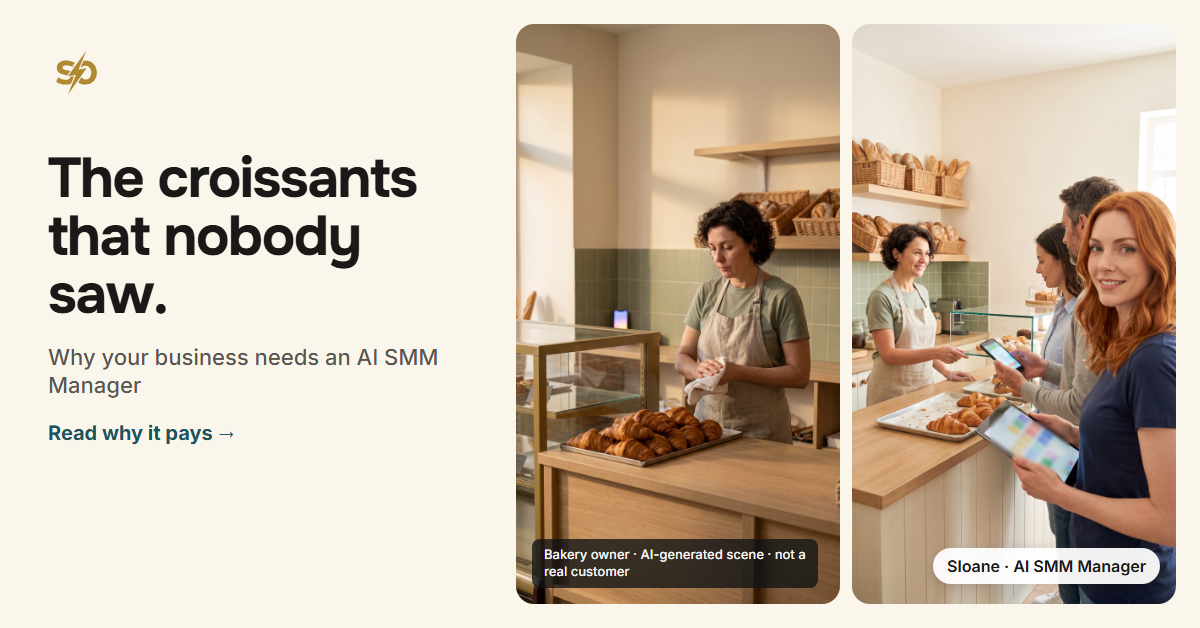
Picture a neighborhood bakery on a Thursday. There's a new cardamom bun on the counter, a weekend special on sourdough, and a tray of croissants that will go in the trash at closing if nobody buys them. The owner has been up since four. The bakery's Instagram shows a photo from March. Its Facebook page last posted about a holiday that ended months ago.
Nobody decided to stop posting. It just fell to the bottom of the list, below the dough, the delivery and the register. And every day it stays there, the bakery is invisible in the one place where most of its customers spend part of every day.
Where your customers already are
The numbers here aren't subtle. According to the Pew Research Center's 2025 survey, 71% of American adults use Facebook and half use Instagram. In a separate Pew survey the same year, 37% of adults said they visit Facebook several times a day.
That time isn't just scrolling past. In a 2025 survey by Sprout Social, a company that sells social media software, 76% of social media users said social content had influenced a purchase in the previous six months. In Sprout's 2025 Index, 81% said social media drives them to make impulse purchases. The croissant tray is exactly that kind of purchase.
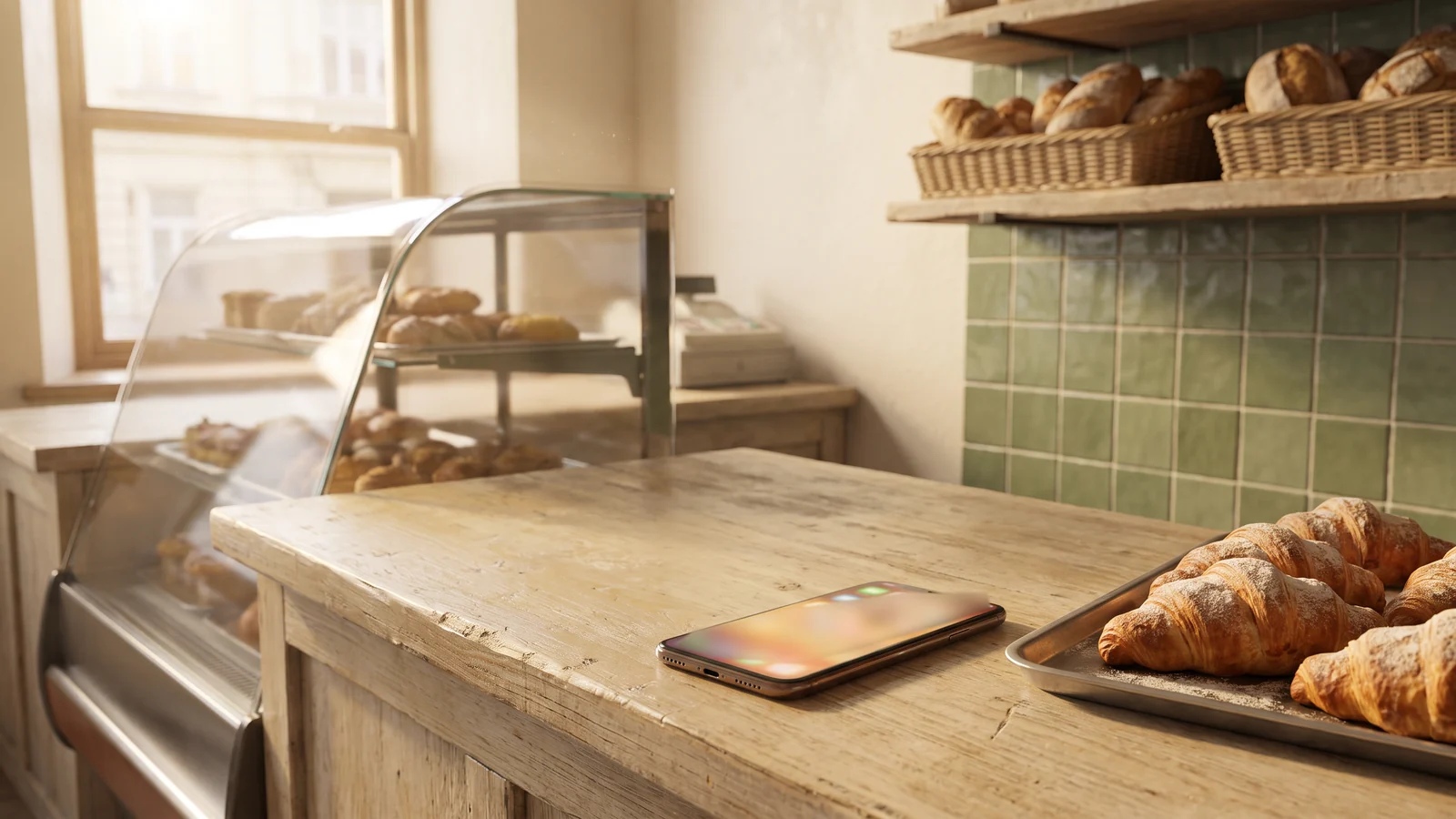
And when people are deciding where to go, social media is on the path. BrightLocal's 2026 consumer survey (BrightLocal sells local marketing tools) found that after reading positive reviews, 24% of consumers go on to visit the business's social media channels. The same report notes that only 40% of local businesses have a dedicated website. For the other 60%, a Facebook or Instagram page may be the only place a customer can check that the business is open, what it sells, and whether anyone is home.
Sprout's August 2026 survey adds one more detail that matters to any shop: social media and physical stores are tied, at 46% each, as the top source of gift ideas, and promo codes shared by brands are the top reason people say they buy. A weekend special that never gets posted is a promo code that nobody ever sees.
What an AI SMM Manager does in the background
Sloane, our AI SMM Manager, runs a business's social pages every day. She works from the business's own base: its products and services with their photos and descriptions, its specials, its facts. She doesn't make the business up. She tells people about what's really there, with the real price from the catalog.
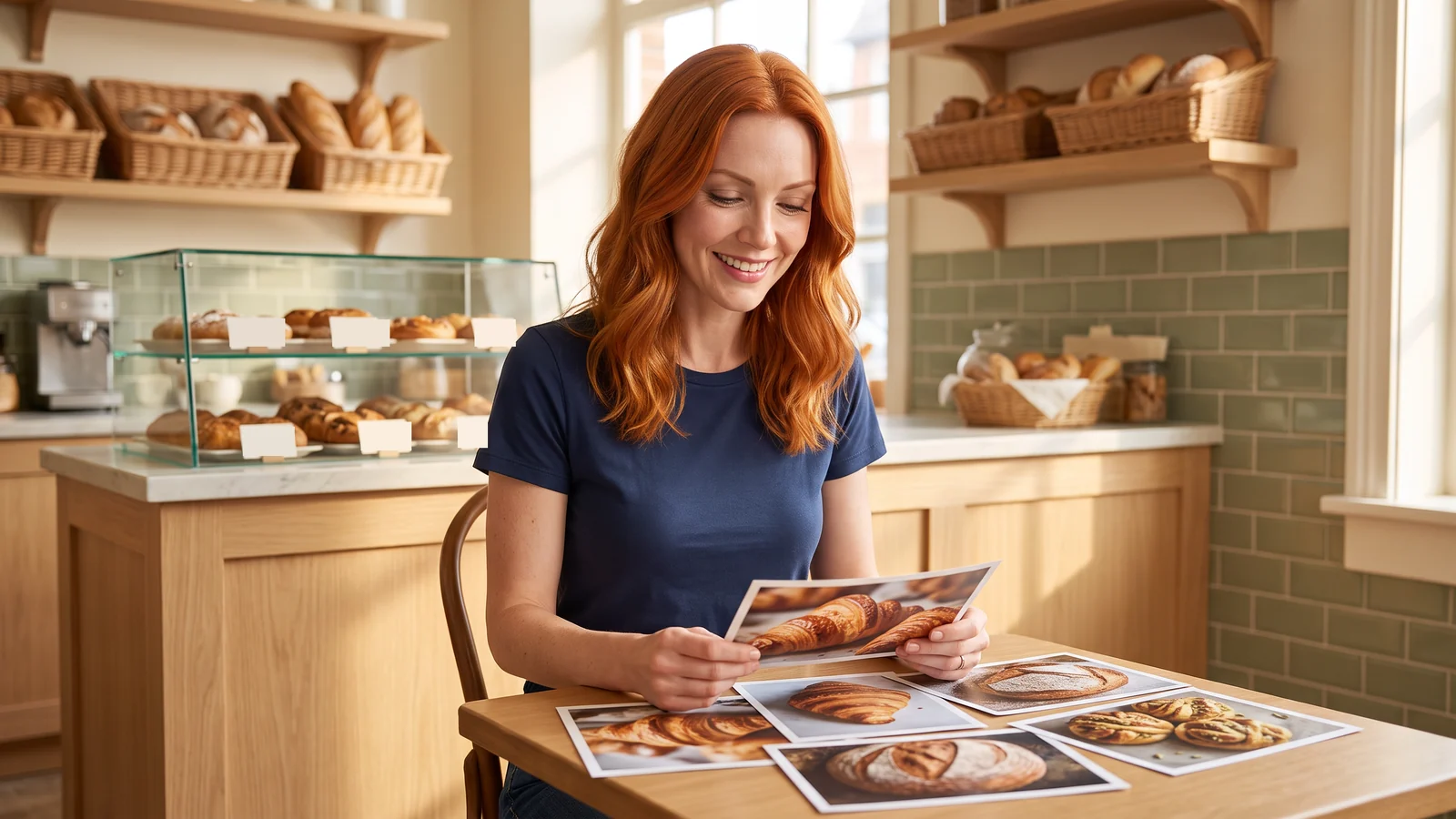
She writes posts on seven kinds of topics: a product, a service, a story about the business, the team, how the work gets done, a useful tip for customers, and a promotion. The owner gives each slot in the schedule its own topic, so the feed stays varied instead of repeating one kind of post.
Posts use the business's own photos first, up to ten from the product or service, as an album in Telegram, a carousel in Instagram or several photos in Facebook. She remembers what she already posted, so the same item doesn't come up twice in a row. One post goes out to every connected channel at once: Facebook, Instagram and Telegram.
Tomorrow's posts are ready a day ahead, and the owner can open the calendar and see them before they go out. If something needs to go out right now, the owner can press "publish now" or simply tell their own ChatGPT to post it.

Just as important is what she doesn't do. She doesn't answer customer messages or comments; other employees handle conversations. She doesn't spend money or run ads. She doesn't promise reach or followers, and neither do we. And she never posts a price or a special that isn't in the business's base.
What it costs, and what to compare it with
The people businesses usually pay for this work are marketing and communications specialists. Federal data from the Bureau of Labor Statistics, published on O*NET, puts the median pay for public relations specialists, the closest occupation it tracks, at $74,750 a year in 2025. A person in that job does far more than post, so this isn't a one-for-one swap. But it shows why most small businesses never hire anyone for social media at all.
An AI SMM Manager costs $49 a month with one channel included, and each additional channel is $9.
The honest comparison for most owners isn't with a specialist. It's with what's happening now: a page with a photo from March, a special nobody hears about, and a tray of croissants at closing time.
How to hire one
Hire an AI employee before a person. Set it up in your own ChatGPT.
1. Pick the work you want off your hands: calls, messages or posts. See it done on our sample businesses first.
2. We're not open for sign-ups yet. Join the waitlist at smashone.us/signup/ and we'll email you when we open.
3. Set it up by talking in your own ChatGPT, the one you already use. It walks you through each step.
Questions owners ask
What does an AI SMM Manager do for a small business?
Sloane posts to your Facebook, Instagram and Telegram every day from your own products, photos and specials, with the real price from your catalog. Tomorrow's posts are ready a day ahead, and you can see them in your calendar before they go out.
Does the AI SMM Manager answer comments and messages?
No. Sloane only writes and publishes posts. Conversations with customers belong to other AI employees, such as the administrator, the sales consultant or customer support.
Will it make up prices or specials?
No. Sloane posts only what is in your business base: real products, real prices, real specials. If an item isn't in your catalog, it doesn't appear in a post.
How much does an AI SMM Manager cost?
$49 a month with one channel included. Each additional channel is $9 a month.
How do I set it up?
You hire it on smashone.us and set it up by talking in your own ChatGPT. We're not open for sign-ups yet. Join the waitlist at smashone.us/signup/ and we'll email you when we open.
Sources: Pew Research Center, Americans' Social Media Use 2025 · BrightLocal, Local Consumer Review Survey 2026 · Sprout Social, Q2 2025 Pulse Survey, Sprout Social Index 2025 and Q3 2026 Pulse Survey · U.S. Bureau of Labor Statistics via O*NET OnLine, Public Relations Specialists, 2025.
