
Reels for owners who hate being on camera
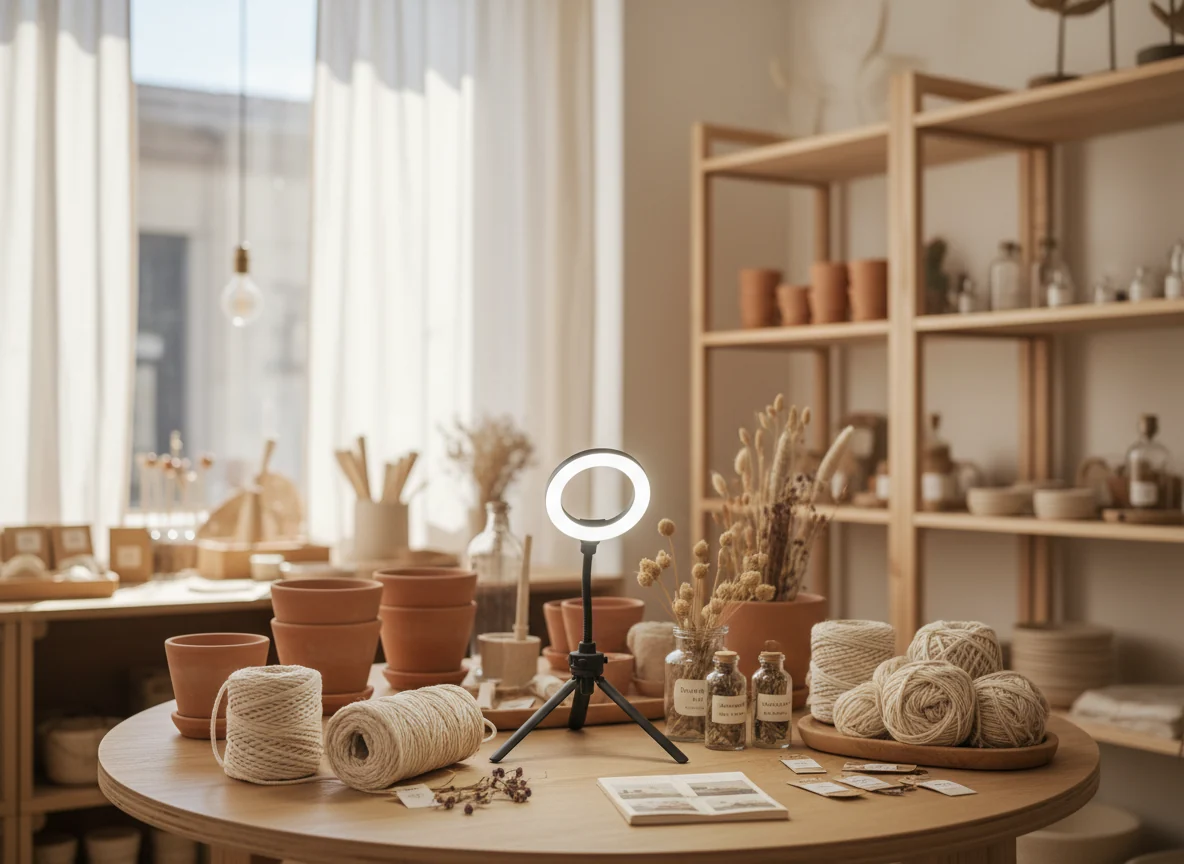
Short video is some of the cheapest reach a small shop can get right now — and the single biggest reason owners skip it is the thought of talking to a camera. Here's the part nobody mentions: the clips that actually work for a local business almost never need your face. They need your hands, your light, and the thing you already make every day.
You are not the product — your work is
Most owners who avoid short video aren't behind on the trends. They just dread being on camera — the awkward pause before you hit record, the worry about how your voice sounds, the second-guessing afterward. That hesitation is completely normal, and it's also avoidable.
The formats that perform for small shops are built around what you do, not how you look doing it. Someone scrolling past doesn't need to meet you. They need to see the candle being poured, the dough being shaped, the bouquet coming together.
Your work is the character. You're just the camera operator.
Five formats that perform without your face
Pick one of these and you have a week of clips already. None of them ask you to perform — they ask you to point the phone at something you'd be doing anyway. Keep it steady, shoot near a window, and use the sounds your phone records or a track from the platform's own library so you never wrestle with a music license.
Product close-ups in natural light
Prop the phone on a stack of books by the window and film one item turning slowly in your hands. Daylight does the work — switch off the overhead bulbs so the color stays true. Ten seconds of a single piece, framed tight, reads as premium without a word of narration.
Hands at work
Wrapping, pouring, repairing, plating — the act of making is naturally watchable. Keep the phone steady on a small tripod or propped against a mug, and let the motion fill the frame. There's no script to forget, because there's no script at all.
Before and after
Ten to fifteen seconds is plenty: the bare table, then the set table; the raw stock, then the finished cut. Film both ends with the same framing so the change lands in a single beat. People stop scrolling for a payoff they can see coming.
A day-opening ritual
Lights on, blinds up, the sign flipped to open — the first two minutes of your morning make a quiet, honest clip. Shoot it the same way you'd actually do it and let the room wake up on camera. It tells a customer you're real and you're here today.
Packing an order
Folding the tissue, taping the box, tucking in the thank-you card — an order leaving your hands is satisfying to watch and easy to film one-handed. Let the natural sounds carry it, or drop in a platform-library track so there's no licensing to think about.
Keep it honest and easy
You don't need a better phone than the one in your pocket. The camera you already own shoots in higher quality than most of what performs well, so spend your energy on light and framing instead of gear.
One take is enough. If the clip is clear and the product looks like itself, it's done — a small wobble or an honest background reads as real, and real is what earns trust. Don't stage a crowd you don't have or borrow props to look bigger than you are; people can feel it, and the let-down costs more than the polish was worth.
Write the caption to answer one question a customer actually asks. Is this in stock? How much? Do you ship? One clip, one question, one clear answer — that's a complete post.

Where this fits in your week
Treat recordings like any other post, because that's all they are. Set aside one slow afternoon, make three or four clips back to back while your hands are already moving, and you've covered most of the week in a single sitting.
Then schedule them the way you'd schedule a photo or a sale announcement — drop each clip into your calendar and let it go out on its own.
You can line up to 5 scheduled posts a day across Facebook, Instagram, and Telegram — far more than a small shop needs. Batch once, schedule once, and the week takes care of itself.
The point isn't volume. It's never staring at an empty Monday wondering what to put up.
Your shelf, your hands, your craft
None of this asks you to become someone you're not. Your shelf, your hands, your craft — pointed at with a steady phone and decent light — that's the whole show. The owners who win at short video aren't the most comfortable on camera. They're the ones who realized they never had to be on it at all.
Start with one format this week. Film it once. Schedule it. Then go back to the work, which was the interesting part all along.

Spend the saved hours on the craft.
7-day free trial on your first hire. Hire here. Set it up in the chat you already use.
Hiring a person costs thousands a month. Your first AI employee costs a fraction of that.
